Showing posts with label emerson. Show all posts

Tuesday, March 16, 2021

Going With the Flow

The Roman Emperor Marcus Aurelius encouraged people not to waste energy by fighting against society. He called it..."Going with the flow." Now, going with the flow has come to mean having a relaxed attitude, letting life carry you along. After all - “what you resist persists,” right?

I've been described as someone who goes with the flow; easy-going, keeping my neutrality in conflicts. Yet I have found that the practice of going with the flow can also lead to laziness or playing the spiritual bypass game or having a reluctance to taking life seriously or deeply or by the collar, when necessary.

Today, I want to about the power and depth in going with the flow in a spiritually conscious & mindful way by going with the flow on the River of the Divine You. 

Life is a series of natural and spontaneous changes. Don’t resist them – that only creates sorrow. Let reality be reality. Let things flow naturally forward in whatever way they like.  ~Lao-Tzu

Going with the flow doesn't have to be a cop-out, accepting life's lemons as the end of the story. You and I create the flow by getting in the Flow on the River of Love and Law. It may not be all peaches and cream and may involve some tough relaxing into the chaos, learning not to stress, and responding versus reacting. The main action behind going with the flow is not just laying back, it's taking hold of the consciousness cord that connects us to the Power of Manifestation where we can get guidance. We cannot practice the love of life in isolation or in a vacuum. Every spiritual path and all the mystics have described that each of us in nature is connected to that single Divine River where the wellspring of infinite possibilities flows. 

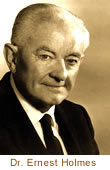
Within this Infinite Mind, each individual exists. We are not separated from Life, and neither is It separated from us. We are separate entities in It — individualized centers of God Consciousness.  ~Dr. Holmes, The Science of Mind

When we awaken to the Truth, we become open to the impulse & guidance of Spirit, inspired by imagination and wisdom, directed by our values, committed to our core principles, and dedicated to transformation and transcendence - no matter the circumstances. Leo Babauta, in the blog, Zen Habits, says:

No matter how much structure we create in our lives, no matter how many good habits we build, there will always be things that we cannot control — and if we let them, these things can be a huge source of anger, frustration, and stress. 

This conflict or condition has already happened; we can't go back to make it not have happened at least not yet. So what do we do when we step in it when junk shows up in our lives - big or small? I had a kidney stone journey in 2013:

4 days of cramps

4 days of feeling like Sisyphus...invoking powerful names = Jesus, Iron Man ...and phrases I cannot repeat...jumping up and down to rattle the stone around and break it up. I noticed the usual go with the flow idea went out of my mind as quickly as the cursing came out of my mouth. Then I became focused on not resolving the pain but remembering who I was. I had plenty of moments of health worries, possible financial concerns, and just the agonizing pain but it was my consciousness work that brought relief. 

Kamal Ravikant wrote:

Most of our pain, most of our suffering comes

from resistance to what Life is. And when we

resist what life is, we suffer. When you can say

yes to life, surrender to life and say: “Okay, what

should I be now?” That’s where power comes from.


There is a story about a young martial arts student was under the tutelage of a famous master. One day, the master was watching a practice session in the courtyard.

He realized that the presence of the other students was interfering with the young man’s attempts to perfect his technique. The master could sense the young man’s frustration. He went up to the young man and tapped him on his shoulder. “What’s the problem?” he inquired.

“I don’t know,” said the youth with a strained expression. “No matter how much I try, I am unable to execute the moves properly”.

“Before you can master technique, you must understand harmony, my son. Come with me, I will explain,” replied the master.

The teacher and student left the building and walked some distance into the woods until they came upon a stream. The master stood silently on the bank for several moments before he said, “Look at the stream. There are rocks in its way. Does it slam into them out of frustration? Watch it simply flow over and around them and move on! Be like the water and you will know what harmony is.”

Whether its COVID or a broken pipe, don’t dig in your heels, push, shove, and struggle until the veins pop out on your head. Stop saying no. Say yes and accept whatever it is.

Now the act of accepting doesn't mean giving permission ...accepting lets us stop thinking we must swim upstream or wish we could go back in time somehow ...accepting turns the dial to tune into and allow the nourishing Flow of the River of Divine Intelligence to carry us over and around the rocks. Here are a few daily practice tips from Bev Janisch:

1. Learn to distinguish between thoughts and feelings that arise from the condition or event – is it

bringing in your small self or your [highest self]?

2. Ask yourself: What is my heart’s desire? What inspired action arising from my soul am I meant to

take today or in this situation?

3. Create a daily habit of communicating with Source through meditation, prayer or “divine chats.”

Going with the Flow is about creating awareness, space, and practices that enable us to tune in to what Divine wisdom is intuiting and then honoring what we hear.

• Commit to participating in the awakening of your spiritual magnificence and personal power

• Commit to catching the spark of Divine ideas

You may be in pain or in fear of a prognosis or consequence, uncomfortable with making some changes in your habits of thought and action. It may be messy, chaotic, sad, or dirty, but as we understand that any yuckiness is the perfect outcome of the flow of the river of life we decided to float upon, we become open to and ready for the ideas, practices, & solutions to incorporate into our boat. Going with the flow doesn't mean you just sit there, hoping to become dislodged. By going with the Flow using your spiritual tools, you will rise up from the hurricane of discomfort. So go ahead and rage and weep for a few minutes, then take a breath and tap into the River of Divine Wisdom and allow your intuition to inform you of your options and find your best practices from a place of “yes” and acceptance. There is beauty in everything around us if we look at it as perfect.

Go with the flow of your life
Go with the flow of your community
Go with the flow of your health
Go with the flow of this time of COVID
Go with the flow of your relationships

It doesn't mean you don't take action. It means you go with the flow on the River of Divine Intelligence and Love to take action with the wisdom of the ages, the power of the mighty Mississippi, the best advice available from the Universe and Its creations.


Affirmative Incantation

I am stepping into the Circle of Love which surrounds me with ever-expanding energy that vibrates at the speed

of the Divine, awakening me to my best self.

In this Circle of Love, I lift up my mind to the highest thoughts and ideas.

In this Circle of Love, I lift up my heart to the highest frequencies of joy, passion, enthusiasm, and purpose.

In this Circle of Love, I honor that which binds us all together in everlasting Unity. I work the Universal Law to

cause and effect my dreams into an experience.

It is beautiful in this Circle.

It is calm in this Circle.

It is powerful in this Circle.

In this Circle of love, I am living Life to Its most abundant, highest, and prosperous; allowing the best of me to flow.


Tax Deductible Love Offerings: PayPal.me/newthoughtsc

or on your Givelify app

Venmo: NewThought-SpiritualCenter

Support us as your AmazonSmile and at iGive.com

Facebook: @newthoughtsc

Twitter: @newthoughtsc

Instagram: @newthoughtsc

Website: https://www.newthoughtsc.org


2021 New Thought Spiritual Center. All rights reserved.


Tuesday, February 23, 2021

PRACTICE PRACTICE PRACTICE


Enlightenment is a destructive process. It has nothing to do with becoming better or being happier. Enlightenment is the crumbling away of untruth. It’s seeing through the facade of pretense. It’s the complete eradication of everything we imagined to be true.  ~Adyashanti


Those who have heard me before know that I am focused on construction, not destruction

  • replacing, not displacing
  • application vs annihilation
  • eliminating by activating
  • losing bad habits through the creation of new ones to inhabit
  • constituting the positive to decommission the negative
  • leaving the school of hard knocks and enrolling in the university of Universal opportunities 

We are not victims....we are victors!
We do not survive...we thrive!
We do not struggle...we ascend!

I've encouraged you to move from thinking about the Divine idea to feeling It and experiencing It using spiritual practices and mystical experiences to rise above and beyond any one path, religion, or tradition; like a mountain with many trails, a tree with branches aplenty, or a river with numerous tributaries, deltas & wells.

We are not bound by the precedent of our habitual thoughts - they can be changed. We are not bound by the precedent of our beliefs or our actions, statements, or positions, they can all be changed, replaced, reconfigured, adapted, alternated, dissipated, elevated, updated, refreshed, or traded-in. We are freed by Principle - to surrender to the Truth, step around & past the mere facts in our life or the temporary diversions, deviations, detours, and roundabouts, and put them in the rearview mirror

How? 

By falling in love with the process. From centering and grounding through prayer and meditation, embodying Spirit directly, communing with the Divine with intention and purpose, and by practicing the ancient wisdom, New Thought, neuroscience, mysticism, metaphysics, love, peace, powerful grounding, centering, and the affirmative prayer aspects of clean slate spirituality

You don't have to have engaged in anything nefarious to join the clean-slate movement. You don't have to have immersed yourself in a series of addictions to have a do-over. You don't have to have committed a crime to get a second chance. It matters not if we welcome that clean slate or it is thrust upon us. Take the time to love and practice the opportunity for greater clarity, creativity, and new possibilities to emerge. 

Finish each day and be done with it. You have done what you could. Some blunders and absurdities no doubt crept in; forget them as soon as you can. Tomorrow is a new day.  ~Ralph Waldo Emerson

Sometimes, maybe most of the time, it isn't easy. Just start with the decision to practice some mindful spiritual activity, love the decision, and get passionate about the decision. Your willingness to embrace the moment, confront any pain is a powerful Practice of the Presence of the Divine. It is a practice of Oneness, Love, and Creation, a practice of engaging in quieting the mind & body and awakening the heart and soul, and a practice of living in alignment with our Science of Mind Principles and being congruent in thought, word, and behavior.

Loving a spiritual practice can be exhilarating or terrifying...usually both. I have faced a blank page, illness, an instant family, divorce, career changes, major moves, losses, successes - just like most of you. Many I have liked / many, not so much...clean slates both wanted and unwanted. Too often I find myself with a lot of 'doing' going on, however, the bigger answers always came from tapping the Source of Creation and Infinite Potentiality that is within me, using the heart instead of the brain, and the vibration of the Divine instead of the logic in the head. I know I have talked about it before...

        Cultivating self-awareness and self-reflection

...looking after and loving yourself

        Establishing a routine of examining your beliefs, behaviors, and fears

...and asking your heart whether or not they still serve you

Focusing on what you WANT

Not worrying about what other people think 

Following your passion and taking action

Surrounding yourself with allies, mentors, and like-minded people

But I get it. The birth of anything new may be full of pain and messiness, emotions may emerge...that's okay because they act as an inner GPS, letting you know if your thoughts are moving you further from or closer to Source. And any new or renewed spiritual practice can be sloppy or uninspiring:

Have you ever sat on your floor in the quiet, your hands placed on your knees, and you tell your brain to be still?

I have...it was anything and everything but...and that's okay.

Have you ever wondered if it is wrong to scratch during meditation or prayer?

  It's not...scratching an itch is self-care. Give it its moment and scratch.

I remember thinking it was smart to time myself in meditation. Have you?

Very quickly you think it's been forever, so you look at your phone and you can swear you hear it laughing at you. You see the timer reads 2:42 (two minutes and 42 seconds) and you set it for 10. It's okay - go ahead, have a stretch and try again. But first, stick your tongue out at your phone – I'm sure the timer was wrong (lol).

Here's an idea:  when you have to remind yourself to meditate, pray, do your vision board, etc.

...tell yourself you're practicing self-care
...just be sure to leave out the “f-ing” part
... self-care is more zen without the swear words....usually.

While in spiritual practice, have you ever wondered about the quiet? if it’s okay to NOT be quiet?

I have....so I put my phone timer on pause and asked Siri about it. She didn't know and cursed at me for pausing my meditation.

Or have you ever thought, “Did I pay the credit card this month?”

...and then chastise yourself with, “Shhhhh, relax.” And a few minutes later, “Wait, DID I?”  I have...this morning

Sometimes I decide that sitting on the floor trying to meditate isn’t what self-care looks like today so I put on some clothes (pandemic lock-down and all) and go sit outside or walk or watch a bird at the feeder or listen to Laura Berman on this evil contraption that times my meditations. Soon enough, sitting on the ground, my eyes closed, listening to the talent and wisdom and just being, not paying attention to the seconds or the weather or goals or duties or bills or the news...just remembering, I Am enough. By the time the song ends, I take a deep breath, stand, and know that I have just done some self-care.

Meditation and prayer?

Keep at it!

If that Treatment or prayer didn't feel good - start over. If you think your vision board is too rule-following - start over. 

  • To live from the space of clarity and possibility, we are called to Practice the Presence regularly
  • To release thoughts of past or future and ground ourselves in the present, we are called to Practice the Presence regularly 
  • To experience whatever understanding or gift the moment has for us, we are called to Practice the Presence regularly

But seek first the kingdom of God and Its righteousness, and all these things will be added to you.  ~Matthew 6:33

It doesn't mean you don't plan or set goals or ignore the future...you create the future by your practices today. 

Don’t allow your wounds to transform you into someone you are not.                                                                                              ~Paulo Coelho 

If crying in the shower is part of your spiritual practice, especially in the frustrations of lockdown, closed schools, work-at-home, unemployment, and everything else many of us are going through this last year - have at it.....love it....use it!

Spiritual practice is a personal, ever-evolving transformational tool. Just...Practice, Practice, Practice and

...make it to your own Carnegie Hall to get to!
...your own healthy body....your own happiness!
...your own lovefest....to create your own fabulous life!


Affirmative Incantation

I welcome the promise of a clean slate that every moment holds. And so, in this moment and the next and the next...

I have a renewed energy to get things done.

I do things that are fulfilling and gratifying.

I communicate clearly, specifically, and lovingly with myself and all around me.

I am focused on a habit of happiness and health.

I have the courage to step out of my comfort zone and be victorious.

I revel in the Truth that I am backed by the Universe in every solution that is required.

I protect and care for all that I love.

As I feel this love of all I Am, I Am being this Love of all I Am. With this feeling and beingness alive in the deepest part of me, I live this Love of all I Am in all I do right here, right now, and forevermore.

Monday, July 8, 2019

Are You Free Yet?

People demand freedom of speech as a compensation for the freedom of thought, which they seldom use.     ~ Soren Kierkegaard
We have love affairs...some are romantic - others are with our home, a job, a hobby, etc. But we sometimes have others with things like despair, loneliness, dis-eases of various types of the mind, body or spirit. They are habits...some learned, acquired, accepted, and, too many, destructively held onto. Sometimes we don't realize they are there. We get used to them or have lost the ability to spot them. I've had relationships like that, jobs like that, eating habits like that, and even apartments like that. I have found the causes end up to be some combination of a lazy spiritual practice or a fear of success, being shackled by shame, boxed in by blame, gated in guilt, rotting in resentment or some kind of apathy because its “too late” or "I'm not smart enough" or something else enough or too much. Sound familiar?

If we take heed to Thomas Troward's decree that we are here to be happy, it's also irresponsible. But it's your right...you were born free to choose.

Being a citizen of the U.S., we are given many freedoms. Freedom of speech, unrestricted movement, religious beliefs, and others. Being an individualization of that Creative Power of the Universe, it is our birthright to have the exact experiences we desire. But, too many times, we waste the infinite possibilities the Universe has given us with these habits of hassles & unhappiness. But it's your right …. have at it!

I don't think that's what any of us really want, these hassles and unhappiness. Yes? 

I think we desire to move past the negative past. Yes? 

I think it is time to divorce, dissolve, resign from, split away, terminate, separate, vacate, abdicate, and just darn quit having hassles in our lives. Can I hear an “aye” to that?

Hell, let's Amen to that!
The freedom we seek is to use our own mind and body, to live our own life, instead of the life of the belief system. When we discover that the mind is controlled by the Judge and the Victim and the real "us" is in the corner, we have just two choices. One choice is to keep living the way we are, to surrender to the Judge and the Victim.
The second choice is to do what we do as children when parents try to domesticate us. We can rebel and say "No!" We can declare a war against the parasite, a war against the Judge and the Victim, a war for our independence, a war for the right to use our own mind and or own brain.   Don Miguel Ruiz, THE FOUR AGREEMENTS
Nobody likes to hear that the junk occurring in their lives is brought on by the same Power that brought the wonderfulness in their lives: their thoughts and feelings ... their beliefs. But it's true. The great thing about that is that we get to choose what we want in out experience ... Prizes or Plunders? 
I'll give you a moment to decide.
There is one mind common to all individual(s)... Every(one)... is an inlet to the same and to all of the same ...once admitted to the right of reason...(you) are made a freeman of the whole estate. What Plato has thought, he may think; what a saint has felt, he may feel; what at any time has be-fallen any (person), (they) can understand. Who hath access to this universal mind (each and every one of us) is a party to all that is or can be done, for this is the only and sovereign agent.                                                     Ralph Waldo Emerson, from his essay, HISTORY
That's you. The only and sovereign agent of your life. Each and every one of us...you, you, you, me...
are responsible to declare our independence from lack, strife, any ideas that do not fulfill our mission to vibrate at the speed of the Divine. And with this independence, we shall infuse energy, vibrancy, love, and peace into ourselves, our Center, our city, our state, country, and the world.

In TOMMY, Peter Townsend wrote:


I'M FREE- I'm free,
And freedom tastes of reality,
I'm free-I'm free,
And I'm waiting for you to follow me.


That is what we are going to do today, declare our freedom to ring in Truth. Declare our freedom to be in joy. Decree that we have the freedom to expect goodness, prosperity, vitality and vibrancy, love and respect, creativity and happiness.

And so here now is our New Thought Declaration of Independence:

When in the Course of human events, it becomes necessary for one person to dissolve the bands and bonds of struggle, strife, lack, and faithlessness, which has connected them with a life that does not serve their greatest good, and to assume among the Power of the Universe, the separate station of Prosperity to which the Laws of Nature entitle them, a decent respect to the opinion of one who speaks in Truth requires that 
they should declare the causes which impel them to the separation. 

I hold this Truth to be self-evident, that I am created equal, that I am endowed by my Creator, that which is within me, with certain unalienable Rights, that among these are Life, Liberty and Happiness. That to secure these rights in my life, beliefs are instituted by me, deriving their just powers from the consent of my Mind and the Law of Cause and Effect. That whenever any Form of My Beliefs become destructive of these ends, it is the Right of Me to alter or to abolish it, and to institute new thoughts, new feelings, new perspectives, laying its foundation on such principles and organizing Its powers in such form, 
as to them shall seem most likely to effect my Safety and Happiness. 

Prudence, indeed, will dictate that Beliefs, long established, should not be changed for light and transient causes; and, accordingly, all experience has shown, that many times I am more disposed to suffer, while evils are sufferable, than to right myself by abolishing the beliefs to which I am accustomed. But when a long train of abuses and usurpations, pursuing invariably the same Object, evinces a design to reduce Me under absolute or partial lack, it is my right, it is my duty, to throw off such Beliefs, and to provide new thoughts and feelings, new perspectives and beliefs, for my future security and happiness. 

Such has been my patient sufferance; and such is now the necessity which constrains me to alter my thinking and my Beliefs. 

Part of the history of my present beliefs is a history of repeated injuries and usurpations, all having in direct object the establishment of an absolute Tyranny over my happiness. 

And so I now declare, with full knowledge and embodying of the One Power within, that One indestructible, absolute and self-existent Cause. With that Spirit expressing through me, which is the Unity of all life, I claim and swear to use my creative thoughts to think from that eternal goodness, that eternal loving kindness, and that eternal givingness of Divine Intelligence. To act, be, and surround myself with love, abundance, vitality and vibrancy. To think, reason, and live without the bondage of any negativity from my past, without the consciousness of “no” or the shoulda/woulda/coulda of “not yet”, without the fear of a future I get to create, without water cooler gossip or the news and opinions of CNN, MSNBC, FOX NEWS, NPR, or any government or religion that may be running around in my mind like a rat in a cage, like squirrels in a whirling dervish, like chattering monkeys – 
invading my consciousness. 

I, therefore, do, in the Name, and by Authority of my birthright as an individualization of the Source and Substance of All, solemnly publish and declare, that I Am that I AM, and of Right ought to be Free and Independent of destructive thoughts and beliefs; and that I Am that I AM, is absolved from all allegiance to negativity, and that all connection between me and the State of Lack and Limitation, is and ought to be totally dissolved; and that as a Free and Independent personalization of God, I engage my full Power to levy Peace, Prosperity, and Love in my life from this day, forward. And for the support of this Declaration, with a firm reliance on the protection and Power of the Divine Intelligence within, I pledge to my Life and sacred Honor. 


Let us sign our signatures in the air; thus committing to this Declaration of Freedom, for yourself and the betterment of our world. And as you do, say these words: "I declare my independence from that which no longer serves my greatest good."


GOD BLESS YOU AND 

GOD BLESS YOUR FREEDOM! 


Affirmation Today I choose abundant life. I choose the freedom to express my perfection. Today I choose to feel life, embracing it fully!

Today I choose to love everybody, knowing there is always more good than bad in everyone.

Today is the day I choose to live my Declaration of Independence, knowing my Word, my vow, my declaration is powerful, palpable and shining brightly in my life right now!

Thursday, June 27, 2019

THE POWER OF TEN


We believe the ultimate goal of life is the complete emancipation from all discord of every nature and that it is sure to be attained by all.  ~Ernest Holmes, Declaration of Principles

We accept a lot of rules and regulations throughout our lives. Most of them aren't written, they are learned and accepted from childhood. Our parents, teachers, clergy, friends or society put these ideas into our heads and we buy into them out of emotional immaturity or blind acceptance because it is from an adult or role model. When we realize that these ideas no longer serve us (if they truly ever did), sometimes after painful experiences or even "hitting bottom," we finally step back and seek wisdom from our Source, seek original purpose and intelligence.

Our purpose is to express our divine potential ... The more we awaken to our divine nature, the more fully God expresses in and through our lives. We are here to set a positive example and be a role model for others. We are here to make the world a better place.   ~UNITY Principles

How do we do that? How do we emancipate ourselves from these ideas, these rules and regulations that are in our way to a prosperous, love-filled, peaceful life? It's many times a desperate mish-mash. Sometimes we re-read Chopra's 7 Spiritual Laws of Success or a Louise Hay book or an Ernest Holmes book or go back to Emerson's Spiritual Laws essay. We may refer back to the Golden Rule or the Buddha's Four Noble Truths. But, there's also the 7 Hermetic Principles and many, many more ideas and reading material that we can seek to inform us, inspire us and gives us tools, through spiritual laws, to reboot, rebuild and transcend.

How many of these spiritual laws are there? Do a search, it can be confusing. Is it...7? 33? 4? 11? 105? 1? Throughout the millennia of sacred texts and New Thought books, we grapple with whatever we can to assist us moving away from these learned, stagnant, and destructive rules and regulations. Today, I want to talk about the spiritual laws that add up to the power of ten.
Quite the interesting number, here are some examples of the power of ten:

     *The Roman numeral for 10 is X, which is two V’s (the Roman numeral for five) put together.

     *The length of an adult hand is usually 1/10 of their height.

     *The traditional 10th anniversary gift is tin, though in more recent times, the gift changed to diamonds....inflation, I suspect.

     *Pythagoras considered 10 to be the most sacred number, as 10 = 1 (existence) + 2 (creation) + 3 (life) + 4 (four elements-earth, air, fire and water). The Pythagoreans believed that 10 was the greatest of all numbers, because it grasps all arithmetic proportions.

     *Ten per cent of the world is left-handed.

     *A divine number in numerology, 10 means a return to unity, the fusion of being and non-being. It also denotes the completion of a cycle, making one very skilled at whatever they choose to do. It has been said that it takes 10,000 hours of practice before one becomes proficient at something. In China, the number 10 means perfection.

     *In sports, ten is the highest score possible in Olympic competitions. The top of the basketball hoop is 10' from the ground. The Big 10 is a collection of college athletic teams...though now it numbers 14.

     *There are ten letters on the Snellen Reading Chart we all use at the optometrists office or DMV: C – D – E – F – L – N – O – P – T – Z.

     *Interstate 10 is a coast to coast highway that spans from Florida to California.

     *Sikhism was founded by Guru Nanak (1469 – 1539) in North India. They believe the word of God came through the Ten Gurus, in a series of rituals, poems, hymns and the Punjabi language. The final of the Ten Gurus was Guru Gobind Singh, finishing his work in approximately 1700.

     *In Kabbalah, which means to receive, The Tree of Life or the Ten Sefirot are the fundamental forces in the Universe. Kabbalists seek to receive the knowledge of God through the ten sefirot. The first three deal with the mind. The next three deal with emotion. The third group deals with what is acted upon. And the final sefirah is the manifestation.

     *Hinduism teaches that the god Vishnu will be reincarnated ten times. So far, Vishnu has been reincarnated nine times. The last incarnation was the Buddha during the Kali Yuga, which is the current time period. The final time is yet to come, which is called Kalki, who is expected to be arriving riding on a white horse and destroy all evil, bringing in a new age called Satya Yurga. I wonder if it will be apocalyptic?                           

     *In the Bible, the number 10 is used 242 times: ten plagues, Yeshua healed 10 lepers, tithing number in Leviticus/Malachai is 10%....exactly what my agent takes every time I get work.

The biggest of the big 10 are the tablets Charlton Heston brought down from Mt. Sinai. There were 15 originally, but, according to historian Mel Brooks, one tablet slipped and broke into 10 million pieces; so we were left with the ten.

Be strong and very courageous, that you may observe to do according to all the laws which Moses my servant has commanded you; turn not from it to the right hand or to the left, that you may succeed wherever you go.    ~Joshua 7

It is written that these Powerful Spiritual Laws came from the finger of Spirit. In Scriptures, it is called Aseret ha'Dibrot or the Ten Statements or Utterances. It is a Decalogue, 10 Words that are never actually called the ten commandments, but nonetheless are 10 ideas of not only how to live an ethical life, but one that is connected to our greatest Self. So, here now, with a translation I believe is closest to the Hebrew in the Book of Exodus, the Power of Ten:

I am the Lord, God of you

It translates as the God of you, not the God over you … of you. Instead of a Man in the Sky fairy tale, the I AM impressed upon the Israelites that It was a being, an energy, a power of you. This denotes a relationship, a connection between God and mankind. The image of the I AM, written about in Genesis and earlier in Exodus is of you; our likeness to God does not have to do with the physical body, it is that of Its creative power, It's intelligence. It's image, not like looks, not a physical thing, but of an energetic, creative thing is of you...and me. This first utterance of these ten is a reminder that people are of God (so too, I believe are any living thing). We are an individualization of that Power, a personification and personalized version of that Divine Presence...the God of you.

Not have, shall to you gods other, beside my face 

Besides Its face, Its idea, Its energy, Its Love, you shall have no other. So I have a question for you: What would be the “other face,” the opposite of an infinite, wise, all-knowing, intelligence that is perfect, whole and complete, unconditionally loving creator of all things? Whatever that is, I don't want it in my life. I don't want negativity, hate, spitefulness, imperfect, dis-eased, dis-tressed energy or power in my life. Do you want that in your life?!?  Well that's the second spiritual law on these tablets. Don't bring that negative energy in your life. Don't buy into the idea that doing whatever, no matter the circumstances to others, to get what you want is the face of God. Theses first two bits of wisdom is pretty much all you need. If we all incorporated these first two, the others would follow naturally, but the Divine wants to be very clear. It continues...

Not you, shall take the name, God of you, for vanity

The Hebrew that is usually translated to the word "vanity" is sheva, which actually means empty or false. Don't use the name, the power, the creative energy that is of you, in you for empty or false means or reasons. We should never invoke It's name in a thoughtless, careless, or stormy manner. When we call upon our powers intentionally, we are actually invoking that we recognize and unify with God as First Cause, the highest power in the universe to manifest Itself through us for a specific purpose. When we use that power for false purposes, empty of the traits of Its face (see above), we are breaking the promise of our very existence. Since the Law is faithful and true to our revelations and declarations, It is always present whenever It is called. This is serious business, what we think, say and do, and we should never take it lightly. Our thoughts, backed by our feelings, turn into beliefs, and beliefs color and flavor and turn into our experiences. Using this power for destructive purposes to our selves or others, goes against the ideas of the creative power we have been gifted. I understand that fleeting thoughts sometimes are negative against one's self and others, but what are the consistent thoughts and words evoked by us all? I ask you, what words, ideas, thoughts and beliefs are you putting after “I Am...?”

Remember the day of Sabbath, to keep it apart

”Remember” is the usual translation of the word, za'kahor, but the Hebrew is more accurately deciphered as "to keep in mind, to actively focus. We are being reminded to actively focus on the Sabbath, which really means to cease or rest. So we need to not only actively focus on resting, but that this ceasing of work is a sacred activity to keep apart from other activities. It a sacrament to actively focus the mind and body on rest, relaxation, and mindfulness. We are to set apart time to focus on and honor the marvelous works of our thoughts and actions. It is not only a day off, it is a spiritual practice. And it is not only about one day off, it can be many moments throughout our day, week, etc. A time of ceasing work, mentally and physically, is a sacred time, a time of reflection, re-booting and just Being....a Divine time to reveal the Divinity within by consciously reconnecting with the Source and Substance of our supply.

Be heavy at the father of you and the mother of you

It is not only speaking about our physical parents, who are the catalyst for our existence. It is, as well, the Source and Substance of all of our supply and all life. It is the mother-father-God, parent of all, we are to "honor." You may not like them, your parents, they may not be nice, but the word does not really mean honor, it means be heavy at or give weight to them. It also does not mean who have to like them, but give import to what you are taught by and through them. Sometimes it is to be informed to how not to be or taught to be the very opposite of how they were to you or treated you. If your childhood was a negative experience as far as your parents go (which I am sad to hear), is it not advantageous to the rest of your life to forgive them, learn from their mistakes, be better than them and not focus on that lousy childhood? It may take some work to do that (and I honor the mental and emotional work you may have to complete) and that does not excuse their behavior, but if our perspective is on healing and learning, we honor ourselves and the father-mother-God in all.


These first five statements are about recognizing and unifying with that which we individualize, that which we represent. The tablets say to respect the Presence within and the Power it individualizes in you and us all. To honor the vertical relationship between each of us and the Universe through our parents, our community and our world. And to take time to rest, reboot and reconnect to the Great Parent. Continuing through the ten utterances, the next five are... 

Not you will murder

Let's look at this one a little deeper than the obvious. I believe this has to do with life, but not just physically. Of course the murder of another human is heinous. But I believe, this section encompasses more; it is speaking also of any shame, lies, gossip or slander said, as well. Shame causes the blood to leave the face which represents a death. Gossip, lies and slander is murderous to the dignity of a person. This type of murder is closer to the thousand cuts idea from the Arabian Nights stories.

In The Pirkei Avot (Ethics of the Fathers), it says, "The evil tongue slays three persons: the utterer of the evil, the listener, and the one spoken about."  Yeshua also linked the ideas of our words and attitudes with murder in Matthew, when he said, "Know you not, that whatever enters the mouth, passes into the belly, and from there is ejected through the intestines? But that which proceeds from the mouth, comes from the heart: and that is what defiles a man. For, from the heart comes out evil thoughts, adultery, murder, theft, false testimony. These are the things that defile a person."

No will you commit adultery

Hebrew word for adultery is na-ap. Adultery is a grave sacrilege, since it not only violates the sworn promise of parties to a sacred covenant, but perverts the picture of our union with God Itself. It is a lie and a theft, an infidelity of promise and a shaming of all. Interestingly, it applies mostly to men, according to Jewish Law, but the idea is universal....don't break the sacred promise you made to your mate, your partner, your friend, etc.

No will you steal, afflict a companion with false witness (lie) or crave all which is companion's

The last three I lumped together. This is not just about theft from others, but theft from self, our self-deceptions. It's not just about lies about others, it, too, is about lying about or to oneself. All are One. The opposite of the word lie in Hebrew is emet (truth), which interestingly uses the first, middle and last letters of the Hebrew alphabet, indicating truth is the first thing, last thing, and all in between everything. So, if you afflict a companion with false witness (a lie), you are being the opposite of truthful, and truth encompasses all of the best of life. Now the action of coveting is an ego thing; not trusting you can manifest whatever it is that you want that someone else might have. We don't need to covet, but template what it is someone else has that you would like in your life.  "I'll have what she's having" does not mean her possession, but one like it. And you do this with your thoughts and feelings and by manifesting it for yourself.

The seventh through tenth of the ideas of these tablets are about not taking from others, because there is no reason to take. The Universe is infinite, there is more than enough to go around. The act of taking is from a lack consciousness. It is from a perspective that one can't have. It is something we get taught and it can become a rule and regulation in our lives; one that, of course, does not ever serve us. If one gives oneself to the I AM and allows themselves to develop a have consciousness, it will show up, whatever that it is. There is infinite available in this infinite and ever-expanding Universe, so go ahead and get your own.

My point in this blog is let's not poo-poo, be afraid of or discount this mitzvah (the actual Hebrew word for commandment-see Deuteronomy 5:25). A mitzvah is a directive or landmark for guidance; a direction given on one's journey. These ten powerful statements are directions to guide us on our journey to manifesting a prosperous life. Like a Bar or Bat Mitzvah is the beginning of the journey for a 13 year old Jewish child to enter adulthood in the spiritual culture, so too, are these ten utterances a guide for spiritual and emotional maturity. They are ethics to be guided by, yes, but more than that, they are for keeping our hearts, minds and beliefs cleansed of dis-ease, dis-tress, dis-connection and dis-array.
The transformation takes place here. You don’t have to wonder if it will take place out there; the world will come when enough of us see through the night into the celestial light “that shineth more and more, unto the perfect day.     ~Ernest Holmes
This book of the law shall not depart out of your mouth; but you shall meditate thereon day and night, that you may observe to do according to all that is written therein; for then you shall succeed and prosper.  ~Joshua 8
Let's stop flirting with this Principle and the power of 10! 
Never sacrifice principle, even for a special occasion. When we sacrifice principle, we are sacrificing our Truth.   ~Dr. Robert Bitzer
Don't look outside of Self for Power or validation. The outside is full of anxiety that eats at us with money fears, the news, nagging bosses, gossip, etc. Stop, rest, and look inside your heart; then take action in mind, heart and body from wisdom of your highest self.

Rediscover Your True Potential 

by placing the Power of 10 in your life!


Affirmation
I make living prosperously a hip thing. I make living creatively a hip thing. I make living healthfully & full of vitality a hip thing. And I make living a life that is full of love, grace, ease and peace a hip thing.

I am hip to my Universal poTENtial times ten times ten times ten. So, I synchronize my heart, mind, intuition and imagination to the Presence of Spirit within, inspiring me every moment of every day to demonstrate my greatest poTENtial.... times ten times ten times ten.

Monday, June 17, 2019

AMAZED BY YOUR GRACE

Have you heard or said any of these?


Q: Why can’t a leopard hide?
A: Because he’s always spotted.

Q: How do moths swim?
A: Using the butterfly stroke.

Q: What do you get from a pampered cow?
A: Spoiled milk!

Q: Why are spiders so smart?
A: They can find everything on the web.


Q: Which is faster, hot or cold?
A: Hot, because you can catch a cold.

Q: Why are elevator jokes so good?
A: They work on so many levels.

Last Sunday, America celebrated Father's Day. And these jokes reminded me of my father. Are Dad jokes...an affliction you had to endure or a great memory? Sunday started me thinking about all that fatherhood stuff. Do you remember when you realized your father didn't know everything? When his fallibility and foibles as a human became evident? Some of you may have had a lot of that in their life, which made childhood very unpleasant in some cases. There comes a time when we have to remember that Dad's have a past, too. The seed of each of us and our beliefs have history and we should take a look at them in that light, as well.


Everyone and everything has been fathered. It is said that metaphysics was seeded by Parmenides who talked about the relationship between mind and matter, and it all being one thing. He wrote, "We can speak and think only of what exists. And what exists is uncreated and imperishable for it is whole and unchanging and complete. It was not or nor shall be different since it is now, all at once, one and continuous." He, of course, was followed by some better known philosophers of the time, Plato and Aristotle. They were the fathers of the philosophy which most of you reading this blog ascribe.

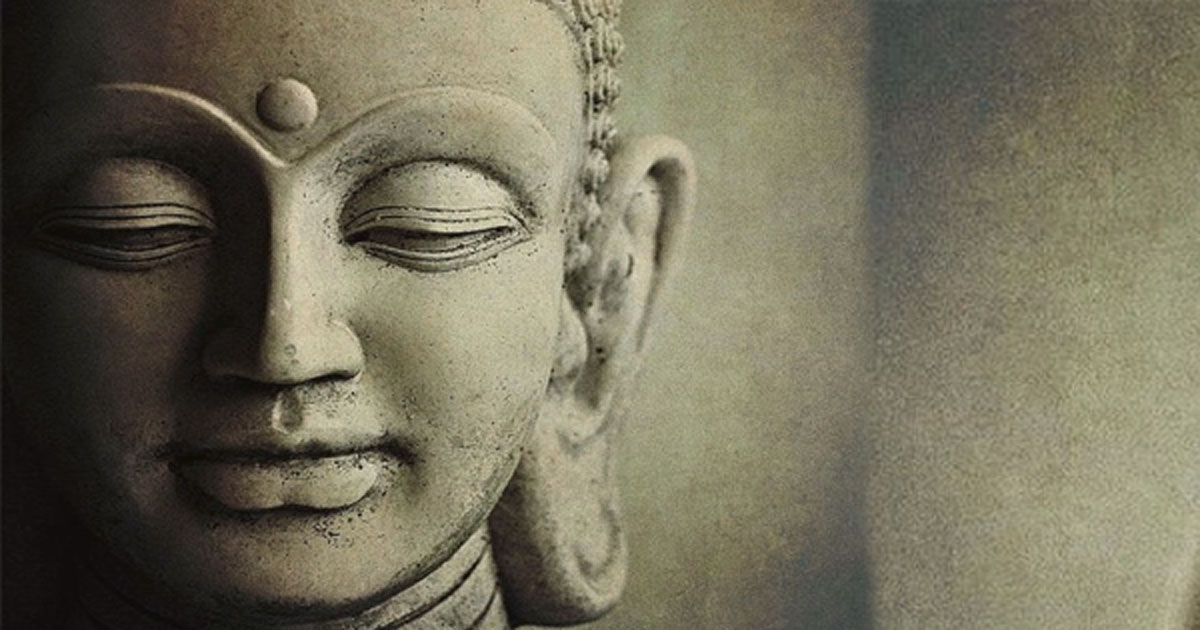
The Buddha, Siddhartha Gautama, fathered the Four Noble Truths, the tenets of Buddhism. He once said, "We are shaped by our thoughts; we become what we think. When the mind is pure, joy follows like a shadow that never leaves."
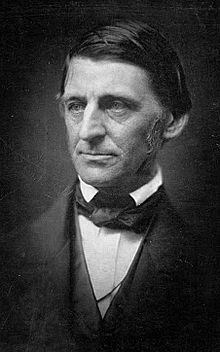
Ralph Waldo Emerson

The seeds of New Thought come from Ralph Waldo Emerson, who told us, "To be yourself in a world that is constantly trying to make you something else is the greatest accomplishment." He was followed by the New Thought father of mental healing, Phineas Quimby, the "thoughts are things” idea from Prentice Mulford & James Allen, Practical Christianity from Charles and Myrtle Fillmore, and, of course, Science of Mind from Ernest Holmes, who, when asked about the doctrine of divine love and the Fatherhood and Motherhood of God, said, 


"Religious Science teaches that there is one universal, self-consciousness or Spirit, which we call God; that there is a universal reaction to that spiritual consciousness which is the law of mind in action, and that there is a universal manifestation, the result of the action of Spirit through law, which universal manifestation is called creation. To each individual this universal Spirit, which is the parent mind, is Father of all, and being personified through the individual, must, through his own nature be immediately accessible to him."

The list goes on...fathers, fathering and fatherhood. During Re-Discovery month, I want to tell you about a man, a father. Though he fathered two daughters, Elizabeth and Eliza, it is of another idea he seeded that I want to blog about today. His name was John Newton.
John Newton was born in 1725. He was nurtured by a Christian mother who taught him the Bible. At the age of 7,  John's mother died of tuberculosis and he was raised by his stern sea-captain father. By age 11, Newton went on his first of six sea-voyages with his father. It was a rough life with rough people, sailors and seamen being as many of them were. By 21, he was forcibly enlisted aboard the H.M.S. Harwich, but Newton rebelled against the discipline of the Royal Navy and deserted. He was soon caught, put in irons, and flogged. But eventually, he convinced his superiors to put him on a slaver ship. Anything to get our of prison. 

John Newton once described himself as "arrogant and insubordinate, living with moral abandon." He once said, "I sinned with a high hand and I made it my study to tempt and seduce others." Newton was 22 years old...wow, these millennials!

The slave ship was owned by a trader named Clow who had a lemon plantation on an island off W. Africa. Newton was treated cruelly and beaten by Clow and his African mistress, becoming ragged and having to beg for food. This went on for several years, finally he was transferred to the service of the captain of the Liverpudlian ship, the Greyhound. On its homeward journey, the ship was overtaken by an enormous storm. After thrashing about in the north Atlantic storm for over a week, its canvas sails were ripped and the wood on one side of the ship had been splintered or  torn way. The sailors had little hope of survival, but kept working the pumps, trying to keep the vessel afloat. On the eleventh day -imagine 11 days in a constant storm in the very chilly North Atlantic Ocean- after eleven days, Newton was too exhausted to pump. They crew decided to tie him to the helm, so he could keep the ship on course while they continued pumping the sea out of the hull. Newton was tied to the wheel, rain and wind blowing at his face, bludgeoning his body, for 12 hours. Twelve hours! Well, Johnny had a lot of time to think in those hours. His life seemed as ruined and wrecked as the battered ship he was trying to steer. He realized that, since the age of 11, he had lived a life at sea with a reputation for such profanity, coarseness and debauchery that he could make other sailors blush at his antics and behavior. In this contemplation, in the midst of the storm both at sea and in his soul, Newton remembered his mother teaching him a passage from Proverbs 1:24-31 ...

Because I have called and you refused, have stretched out my hand and you did not listen; have ignored all my counsel and were not pleased with my reproof...I also will laugh at your calamity and will rejoice when terror and destruction overtakes you; when your fear shows up as desolation and your destruction shows up as a whirlwind; when distress and anguish come upon you. Then you shall call upon me, but I will not answer; you will seek me diligently, but will not find me. Because you hated knowledge, would have none of my counsel and despised all my reproof, you shall eat the fruit of your way, and be filled with the fruit of your beliefs.
Let's break this quote down, clarify a few things. First of all, the definition of reproof is admonishment, yes, but it is also, simply, answer. The Universe was saying, "Hey I let you know what was messed up in your life, put a bug in your ear now and then, counselled you, showed you the way, but you did not listen, you weren't please with my answer." Secondly, the passage talks about the Universe laughing and rejoicing at, in this case, Newton's calamity. We understand now that Divine Intelligence doesn't laugh like a human might laugh. The Universe assumes you enjoy or want the crap in your life; your belief is what is mirrored in your experience and until you tell it otherwise, positive or negative experiences will continue. That is the non-judgmental, unconditional love of Spirit. Newton's disconnect with love, peace, grace and wisdom, brought him hate, self-disgust and ignorance. And until he changed his thinking, with the feelings backing those thoughts into his perspectives and beliefs about himself, he undoubtedly imagined the Universe laughing and mocking him. It was his “woe is me” attitude, his self-disgust and, as well, his desire for a better personality, belief system and basic existence that was doing the actual mocking laugh. The Universe does not laugh or mock, but can seem that way as it answers in kind, from your beliefs into your experience. In fact, God's unconditional love can sometimes suck.

Newton waited, like many of us do, till he was in deep.... waters, inwardly and outwardly before he re-connected to Source. Like too many of us, too many times, in midst of the storm, the chaos, the depths of sorrow, the brink of death; Newton began to open his heart and awareness to his birthright, through the muck and mire of his life to reveal the Divinity within him.

Surviving the storm, his life was transformed. John began a disciplined spiritual practice that led him, at 39, to become an Ordained Christian Minister. He quickly became disgusted with the slave trade and his role in it, writing that it was "a business at which my heart now shudders," working with others to have it abolished as part of his Divine calling, though it took a couple of decades.

For the Sunday evening services, Newton often composed a hymn which helped develop the talk for that week. After a few years, 280 of them were collected and combined with 68 hymns by Newton's friend and parishioner, William Cowper, and published as the Olney Hymns. The most famous of the Olney Hymns was originally called "Faith's Review and Expectation." Not exactly a pithy song title. But, by a couple of hundred years later, it had been recorded by the likes of Diana Ross, Judy Collins, The Celtic Women, The Three Tenors, Alan Jackson, Stephen Tyler, Whitney, Elvis, Aretha, Mahalia, and many others. And it had been featured in several movies as diverse as TOMMY BOY, SILKWOOD and STAR TREK II: THE WRATH OF KHAN (the best ST film :))  It began like this:

Amazing grace! (how sweet the sound)
That sav’d a wretch like me!
Not usually a song you would think to hear in our philosophy, but it is. I have spoken at several spiritual centers that have that song in their service. It has quite a beautiful melody, yes? Now usually they change the word 'wretch' to 'a soul like me.' Understandable, I suppose; don't want to empower that word, 'wretch,' in our life. Yet, let's step back a moment and understand how and why Newton uses that word in the song; acknowledging the facts of his journey. Though the term wasn't used in his time, he avoided the proverbial 'spiritual bypass' and called it like it is; acknowledged his surrender to the Divine by openly admitting to the horrors of his beliefs and actions of the past. This is not a spiritual mind treatment or affirmative prayer. And though thoughts are things and our thoughts (words) are our prayers, this song is describing an evolution, a transcendence, a transformation. He is actually doing, through the dramatic movement of the lyrics, what Ernest Holmes taught us to do... turn away from the condition.

Let's be factual here; we may not use the word 'wretch,' (especially since it is not common in our vernacular at present) but we use other terms that evokes the same feelings as 'wretch':  unfortunate, unhappy, poor, despicable, loser, loafer, coward, failure, and any of the other 'woe is me,' lack and limitation, self-loathing words and phrases we say in our heads and out of our moths. In essence, we are saying, “I am....a wretch.”  So let's not sugarcoat this. But, at the same time, let's re-discover the true meaning of the word and its use in the song.  

We all have those moments when we feel like limitation and lack is rampant in our minds and life or feel hesitation or that time is against us or we feed on some sort of shame/blame/guilt trip. In those times, effective prayer doesn't always come easily; it is forced, feels whiny or dumb. When those thoughts show up, I believe we can use this song as an affirmation, a start to returning to an open calm heart, not in a whirling dervish of chaos and fear, desperation and hopelessness. We can use this "Amazing Grace" to step up, dig in and reboot our thoughts, feelings and, eventually, beliefs to reveal, illuminate, illustrate and demonstrate our Divine origin; allowing answers to arise and to not only know the Truth about ourselves, but live It. Then, as we see or sense the hints, the red flags, the Divine inspired moments in the Law's plan for the manifestation of our bettered, if not magnificent life, we can sit in gratitude. And gratitude, the acknowledgment of our greatest life being present, will inspire you to make the mental statements and declarations that serve you and reveal the passion and fire within your heart for your greatest good over and over again. We can transform any chaotic fire, dis-ease fire, disappointment, anger, hate or lack and limitation fire into the passionate flames of health, wealth, joyous creativity and loving, respectful, kind relationships.

Amazing grace! (how sweet the sound)
That saved a wretch like me!
I once was lost, but now am found,
Was blind, but now I see.

’Twas grace that taught my heart to fear,
And grace my fears relieved;
How precious did that grace appear,
The hour I first believed!
It's time to step up from knowing to believing, and father...and mother...a life that is fabulous, loving, prosperous, happy, full of vibrancy and vitality. Let's do it together, let's do it now....allow yourself to be amazed by your grace! 


Affirmation
Divine Right Action flows through me freely and passionately!
Stepping into the fiery passion of my heart, I gracefully finesse anything and everything with integrity, gratitude and love.

Sunday, April 17, 2011

Is it a New Thought or just Ancient Wisdom in modern dress - Part Three


Ralph Waldo Emerson:

The Transcendentalist

[In Emerson’s Essays] We are lifted out of the provincialisms of time as well as of space … often by the sheer magic of a paragraph come to feel that we live, move, and have our being in the wide universe of spirit, all radiance, all beauty, all good.[1]


Most famous for his lectures and essays, a leading figure in the Transcendentalist movement,[2] and considered the Father of the New Thought Movement,[3] Ralph Waldo Emerson was born to Ruth Haskins and the Rev. William Emerson[4] in Boston, Massachusetts. He was the second of five sons who survived into adulthood; three died in childhood. Just before his eighth birthday, Emerson’s father died of tuberculosis. Raised by his mother and the other women in the family, he was greatly influenced by his aunt, Mary Moody Emerson, of whom he exclaimed:

Nobody can read in her manuscript, or recall the conversation of old-school people, without seeing that Milton and Young had a religious authority in their mind, and nowise the slight, merely entertaining quality of modern bards. And Plato, Aristotle, Plotinus — how venerable and organic as Nature they are in her mind![5]

Aunt Mary “introduced young Emerson to Oriental literature and classical philosophy, speculated with him about John Donne, and laughed at his riddles and puns in Greek.”[6] Her profound effect on Emerson, inspiring him with her love for reading and Nature,[7] continued until her death in 1863. At 14, Emerson went to Harvard College where, by his senior year, he began a lifelong love of poetry while serving as Class Poet.

“In the morning, solitude,” said Pythagoras. By all means give the youth solitude, that Nature may speak to his imagination, as it does never in company; and for the like reason give him a chamber alone; – and that was the best thing I found in college. (Emerson’s Journal, 1859)

After a few years of making his living as a schoolmaster, Emerson attended Harvard Divinity School and, at the age of 26, became the junior pastor of Boston’s Second Church. Three years later, after the death of his wife Ellen Luisa Tucker, he wrote in his journal, “I have sometimes thought that, in order to be a good minister, it was necessary to leave the ministry. The profession is antiquated. In an altered age, we worship in the dead forms of our forefathers.”

His disagreements with church officials over the administration of the Communion service and misgivings about public prayer eventually led to his resignation in 1832: “This mode of commemorating Christ is not suitable to me. That is reason enough why I should abandon it.”

That year he took off for Europe, meeting William Wordsworth, Samuel Taylor Coleridge, and Thomas Carlyle (who had a particularly strong influence on him). During that journey, in France, “Emerson's moment of insight into the interconnectedness of things in the Jardin des Plantes was a moment of almost visionary intensity that pointed him away from theology and toward science."[8]

Returning to America in late 1833, Emerson began his career as a lecturer. His first presentation, “The Uses of Natural History in Boston” developed into his first book, Nature (not to be confused with the essay of the same title written in 1844). In its introduction, he wrote on how the ideas of old do not have to be a part of the philosophy of the new:

Our age is retrospective. It builds the sepulchres of the fathers. It writes biographies, histories, and criticism. The foregoing generations beheld God and nature face to face; we, through their eyes. Why should not we also enjoy an original relation to the universe? …. The sun shines to-day also. There is more wool and flax in the fields. There are new lands, new men, new thoughts. Let us demand our own works and laws and worship.

And yet, in the chapter “Language,” he keeps a connection to the old:

This relation between the mind and matter is not fancied by some poet, but stands in the will of God, and so is free to be known by all men …. It is the standing problem which has exercised the wonder and the study of every fine genius since the world began … There sits the Sphinx at the road-side, and from age to age, as each prophet comes by, he tries his fortune at reading her riddle.

He wants us to be self reliant, to have the freedom to think on our own, using what serves us from those before, ancient and not so ancient, incorporating that wisdom with the evolution of new thoughts and philosophies.

In 1835, Emerson married Lydia Jackson.[9] On September 8, 1836, the day before the publication of Nature,[10] Emerson met with Henry Hedge, George Putnam and George Ripley to plan periodic gatherings of other like-minded intellectuals.[11] This was the beginning of the Transcendental Club, which served as a center for the movement with which he is well known. A year later he brought women in to join the club,[12] including Margaret Fuller, who was an important figure in Transcendentalism. It was at this time that he delivered his now-famous Phi Beta Kappa address “The American Scholar,”[13] his ‘Declaration of Independence’:

The first in time and the first in importance of the influences upon the mind is that of nature …. The next great influence … is the mind of the Past … whether of literature, of art, of institutions, that mind is inscribed. …. Action is with the scholar subordinate, but it is essential. Without it, he is not yet man … Inaction is cowardice … there can be no scholar without the heroic mind. The preamble of thought, the transition through which it passes from the unconscious to the conscious, is action.

1837 also marked the beginning of his life-long friendship with Henry David Thoreau; of whom he once inquired, “Do you keep a journal?”

In July 1838, Emerson was invited to give the graduation address at Divinity Hall, Harvard Divinity School. “[It was there that] Emerson discounted Biblical miracles and proclaimed that, while Jesus was a great man, he was not God: historical Christianity had turned Jesus into a ‘demigod, as the Orientals or the Greeks would describe Osiris or Apollo.’”[14] Outraged, the establishment and the general Protestant community denounced him as “an atheist and a poisoner of young men's minds.” He was not invited back to speak at Harvard for another thirty years.

In 1840, he and fellow Transcendentalists Bronson Alcott and George Ripley decided to begin a magazine, The Dial, with Margaret Fuller editing (Emerson would edit the final two years until 1844). His Essays (first series) were published in 1841. These writings were most influential to the New Thought Movement; we explore three of them here.

Essay: Self Reliance[15]

It is fair to say, as many do, that this is not only excellent prose, but also a definitive statement of Emerson's philosophy of individualism. The first of three epigraphs well describes the 50-paragraph tome: Ne te quaesiveris extra, “Do not seek outside yourself” (Persius).

In this essay, Emerson brings in much of his influences from Kant[16], Carlyle, and Goethe. Seizing on Carlyle’s 1827 claim “Reason discerns Truth itself, the absolutely and primitive True,”[17] Emerson teaches one to “detect and watch the gleam of light which flashes across his mind from within” and to “trust thyself” and be a “nonconformist,” as we are “redeemers and benefactors, pious aspirants to be noble clay under the Almighty effort.” He tells us that “no law can be sacred … but that of my own nature;” and that we “do not need … any secondary testimony.” One must “trust your emotion” for “there is a great responsible Thinker and Actor moving wherever moves a man; that a true man belongs to no other time or place, but is the centre of things … where he is, there is nature … a cause, a country, and an age.” He references the lives of Jesus, Luther, Wesley, Milton, and Caesar, whose histories, words and actions informed and educated him in formulating his philosophy. In the second third of the essay, Emerson talks about how “we lie in the lap of immense intelligence, which makes us organs of its activity and receivers of its truth,” describing a connection to God that is natural and internal. Continuing, he talks about the ancient wisdom becoming the new when he writes, “whenever a mind is simple and receives a divine wisdom, then old things pass away, – means, teachers, texts, temples fall; it lives now, and absorbs past and future into the present hour.” He does not condone casting it all away as much as listening to that voice of the Universe which separates the man-made from the divinely inspired: “That which each can do best, none but his Maker can teach him …. Every great man is an unique [sic].” With this he extols the need to listen to one’s self, not rehash others: “Nothing can bring you peace but yourself.”

Essay: Compensation[18]

In this work, Emerson delves into what is known today as the Law of Cause and Effect; a spiritual law principal to the philosophies of Buddhism, Hinduism, and other spiritual movements.[19] He begins:

Ever since I was a boy, I have wished to write a discourse on Compensation: for it seemed to me when very young, that on this subject life was ahead of theology, and the people knew more than the preachers taught. …. It seemed to me, also, that in it might be shown men a ray of divinity, the present action of the soul of this world, clean from all vestige of tradition, and so the heart of man might be bathed by an inundation of eternal love, conversing with that which he knows was always and always must be, because it really is now.

In this essay, he speaks of a dualism, though not in reference to an outside Power. You might say he speaks of two sides of a single coin. He describes this duality as “the ebb and flow of the sea, day and night, man and woman, in a single needle of the pine, in a kernel of corn, in each individual of every animal tribe … the entire system of things gets represented in every particle.” He tells us “[the] soul, which within us is a sentiment, outside of us is a law.” He continues later with a paragraph of Biblical and literary sayings that was and still remains in the vernacular such as: “Tit for tat; an eye for an eye; a tooth for a tooth; blood for blood; measure for measure; love for love …. Give and it shall be given you …. What will you have? quoth God; pay for it and take it …. It is thus written, because it is thus in life.” And he goes on to prove the point that the Universe works the same way: “Cause and effect, means and ends, seed and fruit, cannot be severed; for the effect already blooms in the cause, the end preexists in the means, the fruit in the seed.”


Essay: Over-Soul[20]

Emerson reveals his pantheistic colors and distaste of duality (as in a God or Power separate from mankind). His journals show he was reading the Bhagavad-Gita[21] and Henry Thomas Colebrooke's essays on the Vedas at this time, once stating: “The Bhagavad-Gita is an empire of thought and in its philosophical teachings Krishna has all the attributes of the full-fledged monotheistic deity and at the same time the attributes of the Upanisadic absolute …. I owed a magnificent day to the Bhagavad-Gita.” Charles Braden said that evidence of Emerson’s reading of the philosophies of the Orient occurred when he wrote, “There is no bar or wall in the soul where man, the effect, ceases, and God, the cause, begins. The walls are taken away. We lie open on one side to the deeps of spiritual nature, to the attributes of God.”[22]

In short, evidence of Emerson’s influences from Ancient Wisdom and beyond is plentiful. In Studies in New England Transcendentalism, Harold Clarke Goddard made an accounting of the number of times Emerson quoted many of these thinkers and writers:

Shakespeare, 112; Napoleon, 84; Plato, 81; Plutarch, 70; Goethe, 62; Jesus, 54; Swift, 49; Bacon, 47; Milton, 46; Newton, 43; Homer, 42; Socrates, 42; Swedenborg, 40; Saadi, 30; Luther, 30; Webster, 27; Aristotle, 25; Hafiz, 25; Wordsworth, 25; Saint Paul, 24; Dante, 22; Chaucer, 20; Coleridge, 20; Michelangelo, 20.

Though he died in 1882, his influences continue through not only the New Thought Movement and other metaphysical liturgy, but with the likes of Nietzsche: “Behold, it saith, I am born into the great, the universal mind. I, the imperfect, adore my own Perfect … the soul is the perceiver and revealer of truth” – a truth born in the before, learned from the past, and projected into the future through the present form of Ralph Waldo Emerson


[1] From Andrew George’s Introduction to Emerson’s Essays

[2] A movement in literature and philosophy that emerged in New England in the 1830s and 40s, protesting the general state of culture and society and, in particular, that of intellectualism at Harvard University and the doctrine of the Unitarian church taught at Harvard Divinity School. Its core beliefs included an ideal spiritual state that "transcends" the physical or observed and is realized only through an individual's intuition; a knowledge that is a priori rather than a posteriori (i.e. religion). Other major figures in the movement were Henry David Thoreau, Walt Whitman, Margaret Fuller, and Elizabeth Palmer Peabody.

[3] Spirits in Rebellion, Braden, p. 35

[4] A Unitarian Minister. Considered Liberal Christians, a non-Trinitarian theology. Per Rev. Samuel J. May of the American Unitarian Association, Boston, 1867: “[They] have no formula of faith; no system of doctrines; no list of articles prescribed by...human authority...believe...that each and every rational and moral being, male and female, is under the highest obligation to form his or her own opinions about religion [free will]...believe with the Apostle Paul (Rom. viii. 14), that, “as many as are led by the Spirit of God, they are the sons of God”...that Jesus of Nazareth was led by the Spirit of God...was the most excellent person who has ever lived upon earth...the best teacher of true religion...the character of God and his purposes respecting man and that the moral precepts he gave were more nearly identical with perfect righteousness...”seek first the kingdom of God.” Prayer is a universal practice and they reject predestination, eternal damnation or the need for salvation...human nature is neither inherently corrupt nor depraved (original sin), but capable of both good and evil, as God intended.

[5] Mary Moody Emerson, from a paper read before the Woman's Club, Boston1869, under the title “Amita.”

[6] “The Simple Life: Plain Living And High Thinking In American Culture,” David E. Shi, 2007, University of Georgia Press

[7] The “Amita” paper: “...she was driven to find Nature her companion and solace. She speaks of "her attempts in Malden, to wake up the soul amid the dreary scenes of monotonous Sabbaths, when Nature looked like a pulpit."

[8] Emerson: The Mind on Fire, Robert D. Richardson, Jr., 1995, University of California Press. The Jardin des Plantes, in Paris, is the main botanical garden in France.

[9] They had four children: Waldo, Ellen, Edith, and Edward Waldo Emerson.

[10] Included one of the tenets of Transcendentalism and New Thought, the Divinity of Man, when he wrote, “A leaf, a drop, a crystal, a moment of time is related to the whole, and partakes of the perfection of the whole. Each particle is a microcosm, and faithfully renders the likeness of the world.” In the chapter “Spirit,” he writes, “Who can set bounds to the possibilities of man … we learn that man has access to the entire mind of the Creator, is himself the creator in the finite.”

[11] Emerson: The Mind on Fire Berkeley, Robert D. Richardson, Jr., 1995, University of California Press

[12] “The Transcendentalists championed the enfranchisement of women. The beginnings of this reform can be traced to them more definitely than any source...Men and women were all alike human beings...and should enjoy equal rights” - Braden, Spirits in Rebellion, 1963

[13] An Oration delivered before the Phi Beta Kappa Society, at Cambridge, August 31, 1837

[14] Buell, Lawrence (2003) Emerson Cambridge, Massachusetts: The Belknap Press of Harvard University Press.

[15] Emerson’s Essays: First & Second Series Complete in One Volume. Edwin Irwin, ed.

[16] Immanuel Kant was an 18th century German philosopher and geographer who believed one ought to think autonomously, free of the dictates of external authority. He introduced the terms transcendent and transcendental meaning to that which goes beyond (transcends) any possible knowledge of a human being. These concepts were important to Coleridge, Wordsworth and Carlyle; who exchanged ideas with Emerson.

[17] Multiple secondary sources

[18] Emerson’s Essays: First & Second Series Complete in One Volume. Edwin Irwin, ed.

[19] Hinduism calls it Karma. Buddhism describes it in the second Noble Truth as Paticca-samuppada (dependent arising). In Galatians 6:7, Paul wrote, "For whatever a man sows, that shall he also reap." Many metaphysicians call it the Law of Attraction. It is also found in Newton’s third law, which states that for every action there is an equal, and opposite reaction.

[20] Emerson’s Essays: First & Second Series Complete in One Volume. Edwin Irwin, ed.

[21] Hindu texts stressing the relationship of The Brahman (the universal spirit) and the Atman (the individual Self). These had a large influence on Schopenhauer, Descarte and Spinoza.

[22] Spirits in Rebellion, Braden, 1963, pg. 37